
How to Analyze a Facebook Ad: 7 Signals That Separate Winners From Noise
How to Analyze a Facebook Ad: 7 Signals That Separate Winners From Noise
Show most marketers an ad and they'll judge it like a creative director: is it pretty, is it clever, would I click it? That's not analysis - that's taste. Real ad analysis is forensic: you're reading the observable signals that tell you whether an ad is working, and reverse-engineering why, so you can use the answer in your own account.
Here are the seven signals we read on every ad, in the order that matters.
Signal 1: Longevity - the only public proof
How long has the ad been running? This is the first thing to check and the single most reliable signal in advertising, because it's economically honest: brands do not keep funding ads that lose money. An ad live for 30 days has survived its test. An ad live for 100+ days is a proven winner. An ad live for a year is a franchise.
Everything else on this list tells you what the ad is doing. Longevity tells you whether it's worth studying at all. Analyze a two-day-old ad and you're studying a hypothesis; analyze a 200-day ad and you're studying a business decision that keeps being re-approved every morning.
The Meta Ad Library shows you a start date for every live ad (that's how to find it - full walkthrough in our guide to spying on competitor Facebook ads). It just won't rank or sort by it, which is the main reason ad analysis at scale needs tooling.
Here's what this looks like in practice - the anatomy of one of the longest-running ads in our library, annotated with the proof signals:
Anatomy of a winning ad
Bulk's longest-running creative
The single longest-running ad in our library right now. Here's what makes it a proven winner.
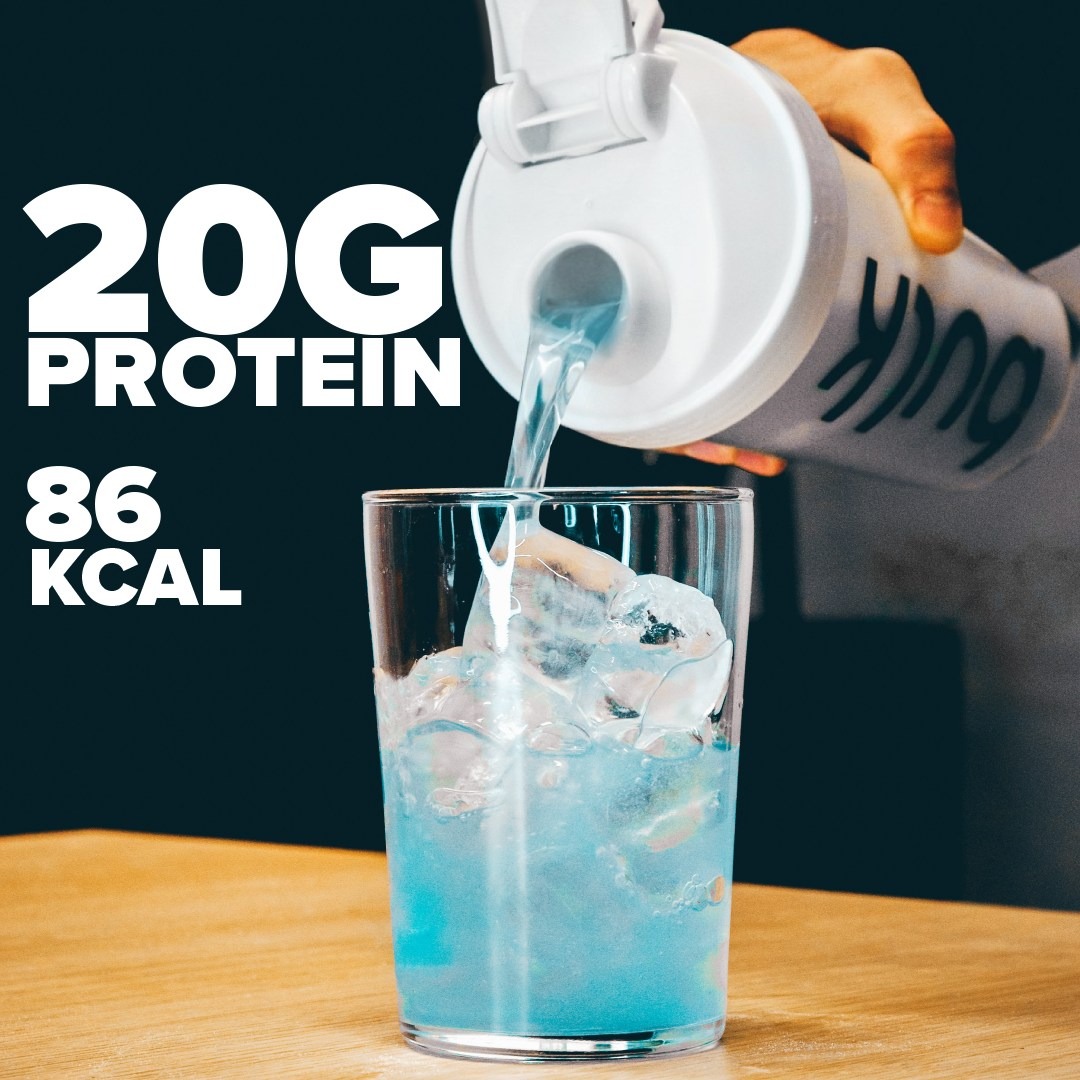
A clean static that reads in a heartbeat - proof that image still earns its place.
Brands kill ads that lose money. An ad running this long is profitable - this is the single clearest proof signal in advertising.
It hasn’t been paused. The algorithm is still spending on it - the strongest vote of confidence a creative can get.
Signal 2: Format
Video or static? Feed-shaped or Stories-shaped? UGC-style or polished brand asset? Format is a strategic choice, and a long-running ad's format tells you what the algorithm rewards in that category. Across the 50 DTC brands in our library, roughly two-thirds of live ads are video - but the split swings hard by category, so the useful benchmark is your competitors', not the global average. If every proven ad in your space is lo-fi talking-head video and your account is polished statics, that gap is the analysis.
Signal 3: The hook
The first two seconds of a video, or the first line of a static. This is where ads are won, because it's the only part most of the audience ever sees. When you analyze a hook, name the mechanism, not the words: is it a question, a bold claim, a pain callout, a demonstration, social proof, a pattern interrupt? Winning accounts don't repeat hook copy, they repeat hook mechanisms with fresh skin. If you catalogue the hooks on a brand's five longest-running ads, you've essentially extracted their testing conclusions for free.
Signal 4: The messaging angle
What's the actual argument? Price, convenience, transformation, status, fear of missing out, us-vs-the-old-way? An ad has exactly one job: make one argument to one person. Identify which argument this ad is making, then zoom out: which arguments does the brand keep running across many ads? A brand with six live ads all hammering "clinically proven" has told you what their purchase data says persuades their customers.
Signal 5: The persuasion mechanics
Look for the specific devices doing the work: social proof (review counts, "10,000+ customers"), authority (experts, certifications, press logos), urgency and scarcity, risk reversal (guarantees, free returns), before/after demonstration, specificity ("87%" beats "most"). Strong ads usually stack two or three; weak ads either have none or cram in six. Note which devices appear in the longest-running ads - that's the persuasion profile of the category.
Signal 6: The offer and CTA
What is the viewer actually being asked to do, and what makes acting now rational? Discount, bundle, free gift, trial, quiz, plain "shop now"? The offer is the most copied and least analyzed part of an ad. The key question: is the offer doing the selling (a crutch that trains customers to wait for discounts), or is the creative doing the selling with the offer as a nudge? Long-running ads with no discount are the most valuable finds in any analysis - they prove the message alone converts profitably.
Signal 7: Variant count
One ad is a data point; a family of ads is a strategy. Search the brand's library for siblings of the ad you're analyzing: same concept with different hooks, lengths, aspect ratios or talent. A concept with eight live variants is a proven winner being scaled - the brand is feeding the algorithm variation because the core angle works. A concept with one variant is still an experiment, however good it looks.
The 10-minute ad analysis, start to finish
Put together, here's the scorecard. For any ad worth studying:
- Check longevity first. Under 30 days: note it, move on. Over 90: this ad deserves the next nine minutes.
- Log the format - video/static, length, aspect ratio, production style.
- Transcribe the hook and name its mechanism.
- Name the angle in one sentence: who it's for and what it's arguing.
- List the persuasion devices you can point at on screen.
- Write down the offer and whether the creative would work without it.
- Count the variants in the brand's library to judge how committed they are.
Do this for a competitor's five longest-running ads and you'll have a clearer read on their strategy than most of their own team has. It's tedious - which is exactly why almost nobody does it, and why doing it is an edge.
Analyzing at scale: where tools come in
Manual analysis works brilliantly for five ads and collapses at five hundred. The Meta Ad Library gives you the raw feed but no longevity ranking, no hook classification and no way to compare across brands - so the analysis above becomes a spreadsheet job that goes stale the week you finish it.
That's the gap ad intelligence tools exist to fill (we've compared the options - free archives, spy tools and proof-led analysis - in our best ad intelligence tools guide). Our own ad analysis library runs this exact framework automatically across 50 leading DTC brands: every ad ranked by longevity, hooks classified and counted, messaging mapped, formats broken down - the 10-minute scorecard, pre-run at library scale, free to browse.
Here's a live sample - some of the longest-running ads in the library right now, i.e. the ones most worth analyzing:
Proven creative, live right now
Real long-running ads from our library - the kind of proven angles to build from. Click any to expand and play.
Related reading
- How to Spy on Competitor Facebook Ads - finding the ads to analyze in the first place
- Why Your Competitors' Ads Tell You What to Test Next - turning analysis into a testing roadmap
- The Psychology of High-Converting DTC Ads - the persuasion mechanics in depth
- The State of DTC Ad Creative 2026 - what 6,500+ analyzed ads say about formats, hooks and longevity
Mammoth Agency
AI-powered performance marketing agency. Proprietary competitive intelligence combined with expert media buying.
Want to see what your competitors are running?
We'll run your account and your closest competitors through the engine and send back the proven winners, hooks and gaps - free, back in 24 hours. No agency BS, just the breakdown.
Get your free competitor report→